
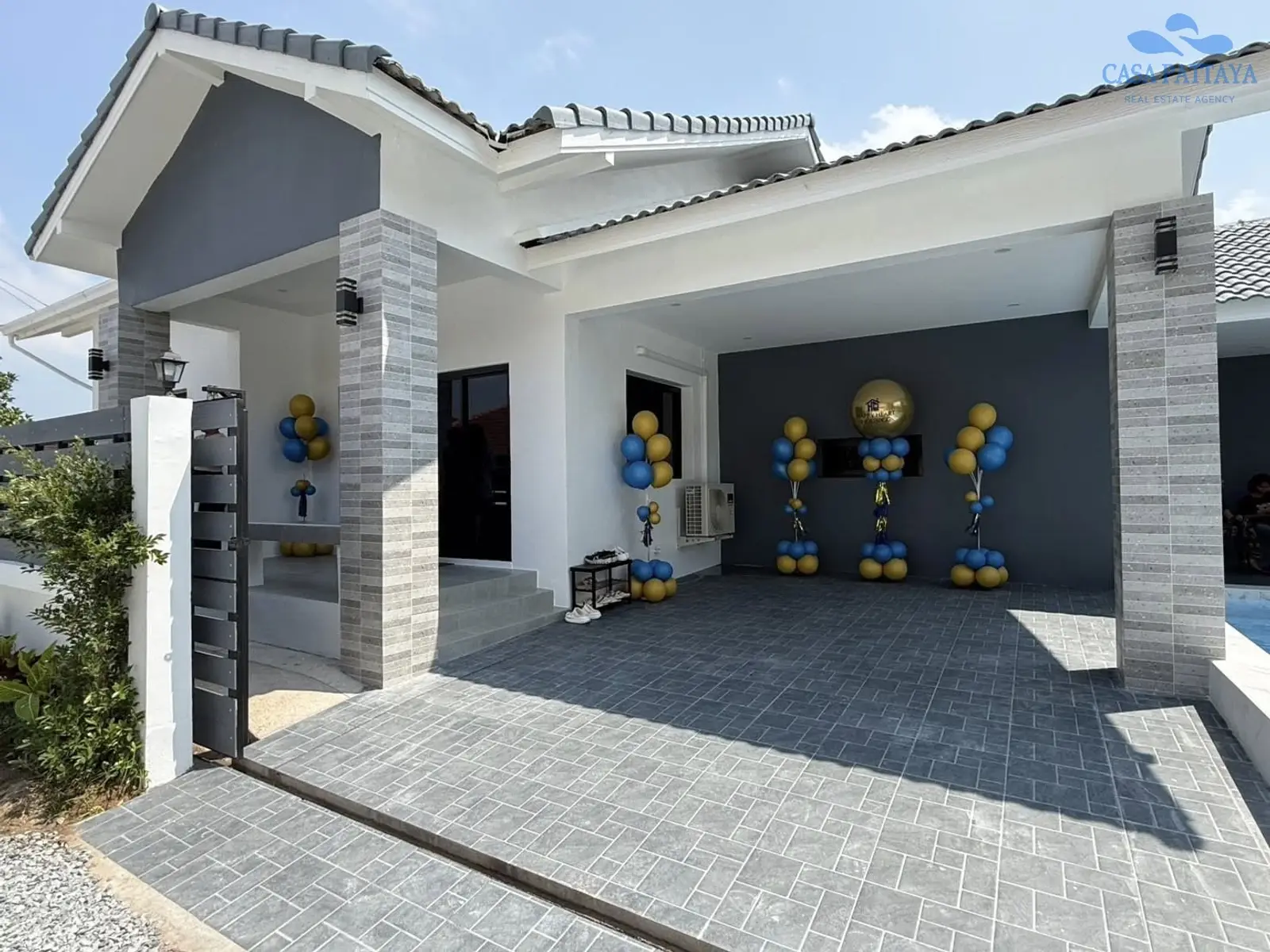
Buying a pool villa in Pattaya appeals to a growing number of foreign buyers, drawn by the tropical climate, steady rental demand and prices still below Phuket or Bangkok. But before weighing pool villa Pattaya rental yield, you must grasp a legal framework very different from the European model: a foreigner cannot own land freehold in Thailand. This guide clarifies what you can truly own, the rental yield to expect and the taxes to anticipate.
What a foreigner can actually own
Thai law bars foreign nationals from owning land. For a villa, two rights are separated: the building and the plot. You can register the house in your own name through a building sale deed while leasing the land on a long-term lease. The most common structure is the "30+30+30" lease: an initial 30-year term, renewable twice. Note that the law guarantees no automatic renewal; each new term requires a signed agreement that the landowner or their heirs may decline.
Chanote or Nor Sor 3 Gor?
The land title determines how secure your purchase is. The Chanote (Nor Sor 4 Jor) is the highest title: precise GPS boundaries, a registered owner, and any mortgages or easements noted. The Nor Sor 3 Gor grants only possession rights with approximate boundaries. Before signing, always insist on land held under a Chanote — the only title allowing a lease to be firmly registered at the Land Office.
Pool villa in Pattaya: what rental yield?
A pool villa's yield depends mainly on location and management quality. In Pattaya, sought-after areas such as Jomtien, Pratumnak, Na Jomtien or East Pattaya deliver gross yields of 5.5 to 7.5% a year, peaking near 8% for well-managed short-term rentals. Seasonality matters: high season (November–February) draws European and Russian visitors, while low season cuts occupancy.
For a realistic net yield, deduct maintenance costs, pool and garden upkeep, and property-management fees, often 20 to 30% of the rent collected.
Purchase costs and taxes
Transfer is settled at the Land Office. The main items to budget are:
- Transfer fee: 2% of the appraised value.
- Stamp duty: 0.5%, or the 3.3% specific business tax on a quick resale.
- Withholding tax: a progressive scale for individuals, 1% for a company.
- Lease registration: about 1.1% of the total lease rental value.
- Recurring costs: upkeep, pool, garden and management, to budget yearly.
These fees are often negotiated between buyer and seller: set out who pays what from the outset.
Visas, structuring and points to watch
Owning a villa grants no residence right, but several visas ease a long stay: the Thailand Privilege (formerly Elite) of 5 to 20 years, the Non-O retirement visa for those aged 50 and over, or the 10-year LTR (Long-Term Resident) for wealthier investors and retirees. Avoid the Thai "nominee" company structure (49% foreign, 51% proxies): authorities are tightening checks and this scheme remains illegal. Always have the title, lease and seller verified by an independent lawyer before any payment.
Frequently asked questions
Can a foreigner buy a pool villa in Pattaya?
Yes, but not the land. The foreigner registers the house in their own name through a building sale deed and leases the land on a long-term lease, usually structured 30+30+30. A condominium is the only full freehold option, within the 49% foreign quota.
What rental yield can a Pattaya villa achieve?
Expect a gross yield of 5.5 to 7.5% a year in sought-after areas like Jomtien or Pratumnak, up to about 8% for a well-managed short-term rental. Deduct 20 to 30% in costs to reach the net yield.
What is the 30+30+30 lease in Thailand?
It is a 30-year land lease — the maximum registrable term — with commitments to renew for two further 30-year periods. The law does not guarantee those renewals: they depend on a new agreement with the owner or their heirs.
Chanote or Nor Sor 3 Gor — which title should I choose?
Always prefer the Chanote (Nor Sor 4 Jor), the highest title, with GPS boundaries and a registered owner. The Nor Sor 3 Gor grants only possession rights with imprecise borders and is less secure for registering a lease.
What fees and taxes apply on purchase?
A 2% transfer fee, 0.5% stamp duty (or 3.3% specific business tax on a quick resale), withholding tax, and about 1.1% for lease registration. These costs are usually split between buyer and seller.


